
Buying guide
Blackout vs. light filtering
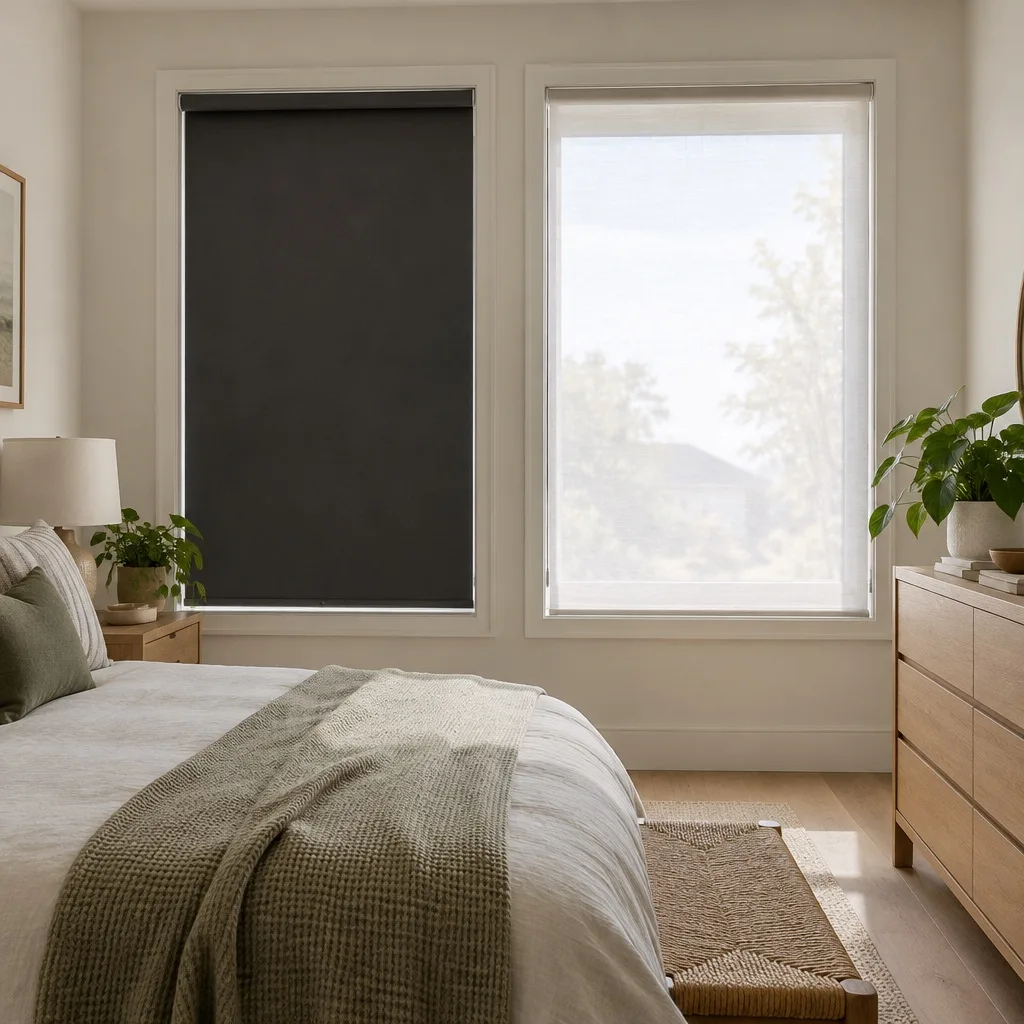
The short answer
Choose blackout where you want to sleep, nap or watch a screen in the daytime. Choose light filtering where you want soft, glare-free daylight and privacy while still feeling the sun. Many homes use both: blackout in bedrooms, light filtering in living spaces.
Blackout fabric
Blackout fabrics have a coated or tightly woven layer that blocks light from passing through the material itself. They are the go-to for bedrooms, nurseries, media rooms and anyone who works night shifts.
A blackout fabric stops light through the shade, but a little light can still slip around the edges. An outside mount that overlaps the window frame reduces edge light; a framed blackout blind that seals the sides gets you closest to a fully dark room.
Light filtering fabric
Light filtering (also called semi-blackout or room-darkening, depending on how dense the weave is) softens incoming sun into an even glow. You keep daylight and cut glare on screens, while neighbors see a soft silhouette at most during the day.
It's a great fit for living rooms, kitchens, dining rooms and home offices.
Sheer and transparent fabric
Sheer fabrics keep the view and add a soft, diffused look. They offer the least privacy, especially at night when lights are on inside. Dual-layer styles like zebra and Shangri-La shades let you switch between sheer and more solid bands in one shade.
Things to think about
Privacy at night
With lights on inside, lighter fabrics show more. If privacy matters after dark, go denser.
Which way the window faces
Strong afternoon sun benefits from denser fabric or a solar screen to cut glare and heat.
See it in your light
Colors and opacity look different in every room. Order free samples and hold them up to your window at different times of day.